When and how did the universe start? There is no other scientific subject that is as fundamental or that sparks such passionate debate among scientists. After all, no one was present when the cosmos was created, so who can say for sure what happened? Scientists can only do their best to come up with the most failsafe theory that is backed up by observations of the universe. The problem is that no one has yet come up with an irrefutable explanation for how the universe came to be.
THE BIG BANG THEORY
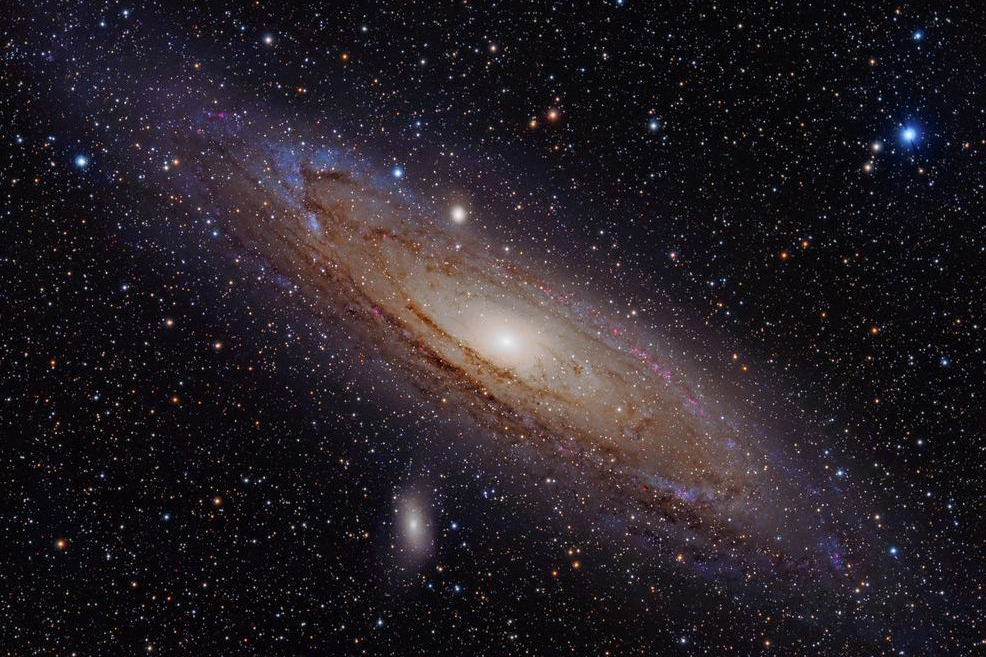
The most well-supported idea for the creation of our universe revolves around an event known as the big bang. This notion arose from the discovery that other galaxies are rapidly moving away from our own in all directions, as if propelled by a powerful ancient explosive force. According to Big Bang theorists, all galaxies, stars, and planets still have the explosive momentum of the instant of creation and are rapidly racing away from one other. This hypothesis was based on an extraordinary discovery concerning our nearby galaxies.
STEADY STATE THEORY
However, the Big Bang isn’t the only idea that has been offered to explain the origin of our universe. A opposing idea, known as the Steady State theory, emerged in the 1940s. Some astronomers came up with this theory since there wasn’t enough data to evaluate the Big Bang theory at the time. The cosmos, according to British astronomer Fred Hoyle and others, was not only uniform in space—a concept known as the cosmological principle—but also unchanged in time, a concept known as the perfect cosmological principle. This theory did not rely on a single event, such as the Big Bang.Stars and galaxies may change under the Steady State theory, but the universe as a whole has always looked the same and will continue to do so. There is one significant flaw in the Steady State theory. If matter is constantly generated everywhere, stars in any part of the universe should have the same average age. However, astronomers have discovered that this is not the case. According to the Big Bang, as galaxies recede from one another, space becomes increasingly empty. The Steady State theorists acknowledge that the universe is expanding, but anticipate that new matter will emerge in the gaps between receding galaxies on a regular basis. This new substance, according to astronomers, is made up of hydrogen atoms that slowly coalesce in open space to generate new stars.
These two theories piqued my interest, but I’m afraid I won’t be able to give you all of them because it would take up all of my blog’s space. It’s an amazing experience to be able to learn about different theories and origins of our universe. It’s also true that we should have a good understanding of these topics because it’s so refreshing to be able to convey things that only specialists understand through this lesson.
 Jeazelle